
Formwork labor productivity measures how much defined work a crew completes for each labor-hour. On a concrete project, contractors can express it as square feet of form contact area installed per labor-hour or as labor-hours required per unit of formwork.
A productivity rate is only meaningful when the work scope, measurement unit, structural element, crew, and jobsite conditions are defined. A rate that covers assembly alone cannot be compared directly with one that includes layout, fabrication, erection, stripping, cleaning, relocation, and rework.
Use the following process to establish a project baseline, identify lost time, and evaluate whether changes to the formwork system or work sequence reduce total labor-hours without compromising safety, concrete quality, or schedule requirements.
Labor productivity generally compares output with the labor-hours used to produce it. For formwork operations, the output may be installed form contact area, a completed pour, or another clearly defined quantity.
Choose one unit for the project and use it consistently across pours. Changing the output definition or the included tasks will make the results difficult to compare.
Contractors commonly view productivity in two directions:
For example, a superintendent could track square feet per labor-hour, while an estimator may prefer labor-hours per 100 sq ft. Both measurements can describe the same operation, but the project team must label them clearly because their numerical direction is opposite.
Write down which tasks are included before starting the clock. Depending on the purpose of the measurement, the scope may include:
A narrow assembly rate can help a foreman examine one task. A total-cycle rate is more useful when an estimator or project manager needs to compare overall labor requirements.
Also decide how to handle waiting time. Record crane delays, missing components, access restrictions, design questions, and interference from other trades separately instead of silently removing them. These delays are part of actual jobsite performance, even when they are not part of direct installation time.
Calculate total labor-hours by adding the hours worked by every crew member within the defined scope. Do not treat six clock hours worked by a four-person crew as six labor-hours; that operation used 24 labor-hours.
Measure form contact area consistently. For walls, clarify whether the recorded quantity covers one face or the total contact area on both faces. Use the same convention in the estimate, field record, and final calculation.
Use these formulas:
When comparing repeated pours, use the same start and stop points. For example, one cycle could begin when components are staged and end when the stripped forms are cleaned and ready for relocation.
Assume that a four-person crew spends six hours completing the defined formwork scope for 1,200 sq ft (approximately 111.5 m²) of form contact area.
1. Calculate total labor-hours:
`4 workers × 6 hours
= 24 labor-hours`
2. Calculate output per labor-hour:
`1,200 sq ft ÷ 24 labor-hours
= 50 sq ft per labor-hour`
This equals approximately 4.65 m² per labor-hour.
3. Calculate labor-hours per 100 sq ft:
`24 labor-hours ÷ 1,200 sq ft × 100
= 2.0 labor-hours per 100 sq ft`
If the next comparable pour uses 21 labor-hours for the same measured output and scope, the recorded labor input decreased by three labor-hours. Before attributing the change to the formwork system, check whether access, crew composition, concrete geometry, lifting support, or rework also changed.
Productivity changes when the work itself, the crew, or the surrounding jobsite changes. Separate these factors in the daily record so that a faster cycle is not automatically credited to one product or process.
Repeated dimensions and consistent layouts give crews more opportunities to reuse an established work sequence. Frequent changes in wall thickness, corners, openings, offsets, and beam-column connections can add measuring, fitting, adjustment, and inspection time.
Review the formwork concept while drawings and pour sequences can still be coordinated. Late dimensional changes can affect component planning, material staging, and crew workflow.
Track how many tasks the selected system requires before, during, and after each pour. Relevant labor inputs include:
The first cycle may include unfamiliarity, initial setup, and training. Record multiple comparable cycles before treating one result as a repeatable production rate.
Component size and weight affect how materials move from storage to the work area and from one pour to the next. Record the number of workers assigned to handling, the equipment used, and any waiting time for shared lifting resources.
A lighter individual component does not guarantee a lower total labor requirement. The result also depends on how many components must be moved, connected, aligned, cleaned, and stored.
Plan storage and staging locations before work begins. Long carrying distances, blocked access, mixed components, and late deliveries can reduce productive installation time even when the formwork itself performs as expected.
Crew familiarity affects layout, component selection, connection speed, alignment, stripping, and cleaning. Track whether workers are using the system for the first time and whether the same crew continues across repeated pours.
Balance the work so that one operation does not leave the rest of the crew waiting. Staging components in installation order, assigning clear responsibilities, and coordinating crane or material-handling windows can reduce interruptions.
Do not pursue a shorter cycle by bypassing engineering, bracing, inspection, or form-removal requirements. Formwork productivity measures must remain subordinate to the project’s safety plans and applicable requirements.
A fast installation cycle can lose its apparent advantage if the completed work requires extensive correction. Record labor used for alignment changes, leakage repairs, tie-hole treatment, surface patching, and other form-related rework.
Establish an acceptable finish standard before comparing cycles. Photographs taken under consistent conditions can supplement the labor record, but they do not replace project specifications or inspection criteria.
Use a controlled improvement process instead of changing several variables at once.
1. Define the output and work scope. Select the structural element, measurement unit, included tasks, and cycle boundaries.
2. Measure the current process. Record labor-hours by phase for several comparable pours. Separate direct work, handling, waiting, cleaning, and rework.
3. Identify the largest losses. Determine whether labor is being consumed by field fabrication, component searches, crane delays, difficult connections, alignment, cleaning, repairs, or trade interference.
4. Standardize repeatable work. Use consistent component layouts, staging locations, crew assignments, labeling, and installation sequences where project conditions allow.
5. Run a controlled trial. Test the proposed system or process change on a representative area. Keep the measured scope and surrounding conditions as consistent as practical.
6. Review the total cycle. Compare labor-hours from staging through preparation for the next use. Check finish quality, damage, safety observations, and schedule effects alongside labor results.
7. Update the estimate and work plan. Use verified field results to revise remaining crew-hour forecasts. Keep assumptions visible so another estimator or superintendent can understand the basis.
The improvement process should continue across repeated pours. A learning curve, changing access, or component wear can affect later cycles differently from the first installation.
Lightweight reusable formwork can reduce specific handling or fabrication tasks when its configuration matches the structure and pour sequence. Confirm the complete installation method instead of relying on material labels or a supplier’s general productivity statement.
Include a modular plastic system in the trial when the project has:
Forbuild describes Gatch as an FRP modular formwork system assembled in roughly 1.18-in. (30 mm) increments. Its published product information lists configurations for walls, slabs, columns, and beams. Confirm the current panel sizes, component combinations, engineering requirements, and project-specific application directly with the supplier.
Use another approach, or combine systems, when:
Gatch does not need to replace every piece of conventional formwork to be tested. A project team can evaluate it on a repeated wall area or another compatible portion while retaining conventional forms for irregular corners or transitions.
Request current documentation for:
Forbuild’s maintenance guidance calls for a release agent before use, high-pressure water for removing concrete residue, avoidance of scraping that could damage the surface, and covered storage away from prolonged direct sunlight. Include these tasks in the productivity trial rather than measuring assembly alone.
Project-specific formwork must still be designed, erected, supported, braced, and maintained for anticipated loads. Confirm the applicable engineering, drawing, inspection, and form-removal requirements before use.
Record the following information for every measured cycle:
Use the same definitions on every record. If the work scope changes, note the change instead of combining unlike cycles into one average.
Ask the supplier and project team:
A video can demonstrate differences in work sequence, but it does not by itself establish a transferable labor rate. Request the measurement conditions and complete task scope before applying a demonstrated result to an estimate.
A good rate is one that meets the project estimate and schedule while maintaining the required safety and concrete quality. Compare the result with records from similar structural elements, work scopes, crews, and jobsite conditions rather than relying on an isolated published number.
Divide the completed form contact area by total labor-hours to calculate output per labor-hour. Alternatively, divide total labor-hours by the contact area to calculate labor-hours per square foot or per 100 sq ft.
A production rate usually expresses output completed during a period, such as square feet per labor-hour or per crew-day. A labor unit rate expresses the labor input required for a unit of output, such as labor-hours per 100 sq ft.
The dominant factor varies by project. Common drivers include structural repetition, field fabrication, component handling, crew familiarity, access, crane availability, trade interference, cleaning, and finish-related rework. Measuring each phase shows which factor consumes the most labor on the specific jobsite.
It can reduce handling effort or dependence on lifting equipment when component sizes, quantities, connections, and movement routes match the crew plan. Verify the total labor-hours through a controlled trial that includes assembly, stripping, cleaning, and relocation.
Use the same work area, drawings, crew-hour definition, included tasks, finish requirements, and jobsite conditions. Record differences in training, equipment, component quantity, waiting time, cleaning, damage, and rework.
A useful product review begins with the project conditions. Provide the supplier with:
Ask for current specifications and a proposed component layout before estimating labor savings.
You can also review our guides to formwork materials, plastic formwork, wall formwork, column formwork, slab formwork, and construction labor shortages.
Explore formwork manufacturers, each offering specialized solutions tailored to different on-site needs and construction challenges.

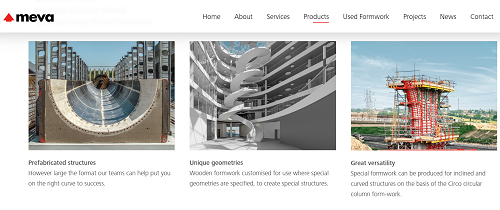
※We select companies that provide formwork suited to each type of building from those that have exhibited at World of Concrete in the past five years (2019-2024) as of June 21, 2024