
Choosing a formwork system is no longer just about brand reputation. Labor shortages, rising project costs, schedule pressure, and jobsite handling challenges can all affect whether a system truly pays off.
This article compares Doka and PERI from an ROI perspective, then looks at when alternative formwork options may be worth considering.
Doka is an Austria-based formwork company founded in 1868. With more than 150 years of experience, it provides formwork, shoring, climbing systems, and scaffolding for concrete construction projects around the world.
Doka is widely used on large-scale infrastructure and high-rise projects, including bridges, tunnels, and dams. Its portfolio includes automatic climbing systems, heavy-duty shoring, and engineered solutions designed for demanding construction environments.
The company is often selected for projects that require structured planning, technical support, and systems capable of handling complex construction requirements.
PERI is a Germany-based formwork and scaffolding manufacturer founded in 1969. The company offers a wide range of wall, slab, climbing, and scaffolding systems for commercial, residential, and infrastructure construction.
PERI is known for developing modular systems that support efficient assembly and flexible project planning. Many of its solutions are designed to reduce handling effort and improve productivity during installation and dismantling.
Its portfolio includes systems such as MAXIMO wall formwork and SKYDECK slab formwork, which are widely used on projects where labor efficiency, cycle time, and ease of handling are important considerations.
Doka and PERI should be compared by how each system fits the project. The main points to check are product range, technology, handling requirements, and total cost impact.
Both brands cover major formwork applications, but their portfolios are organized around slightly different project needs.
Both brands provide digital tools that support planning, coordination, and jobsite execution.
Handling requirements can affect productivity as much as the formwork system itself.
Doka and PERI both provide wall, slab, and climbing formwork systems for a wide range of concrete construction projects. Because purchase and rental costs vary by project size, configuration, and support requirements, comparing systems by overall jobsite efficiency often provides a more meaningful basis than price alone.
Key considerations include labor requirements, handling, equipment dependency, installation speed, and suitability for the project.
Both manufacturers offer wall formwork systems designed for commercial and infrastructure construction, but their design approaches differ.
Doka's Framax system uses large steel-framed panels that are well suited to projects requiring high concrete pressure resistance, repeated reuse, and crane-assisted installation.
PERI's MAXIMO system features one-sided tie technology, allowing wall ties to be installed from one side. This can simplify assembly and help reduce labor requirements on some projects.
When selecting a wall formwork system, contractors should also consider surface finish requirements, available equipment, crew size, and expected construction cycle.
Doka's Dokaflex system combines modular components with H20 timber beams, allowing it to adapt to irregular layouts and complex slab geometries.
PERI's SKYDECK system uses lightweight aluminum panels with an early-striking drop-head design. The system is intended to simplify handling and support faster panel reuse during construction.
Shoring systems also differ. Doka offers heavy-duty load-bearing towers for demanding structural applications, while PERI provides lightweight aluminum props and modular shoring systems that can improve handling efficiency on many projects.
The most suitable system depends on slab geometry, construction sequence, crew experience, and lifting equipment availability.
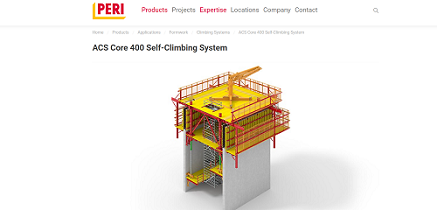
Both companies offer self-climbing systems for high-rise buildings, bridge pylons, and other vertical concrete structures.
Doka's SKE climbing system is designed for large formwork units and heavy structural applications. PERI's Rail Climbing System (RCS) provides modular climbing options that can operate hydraulically or with crane support, depending on project requirements.
Each manufacturer also provides protection screen systems to improve worker safety during climbing operations. The appropriate solution depends on building height, wind conditions, lifting methods, and construction planning.
In the U.S. market, formwork selection is increasingly influenced by labor availability, project schedules, equipment access, sustainability requirements, and total cost control. A system that performs well on one project may introduce unnecessary complexity on another, making project fit more important than brand recognition alone.
Labor shortages continue to affect construction productivity across the United States, changing how formwork systems perform in practice.
The real cost of formwork extends beyond purchase or rental price. Evaluating the total cost of ownership helps contractors understand how a system affects overall project performance.
These factors determine whether a system improves project economics or simply shifts costs from one part of the project to another.
Sustainability is also becoming a more important consideration in U.S. construction projects. Depending on the project type and procurement requirements, contractors may need to submit Environmental Product Declarations (EPDs), Product Carbon Footprint (PCF) data, or other environmental documentation during the bidding process.
Both Doka and PERI have expanded their environmental reporting to support projects with carbon reporting requirements.
While environmental requirements vary by project, carbon reporting is becoming another factor to consider alongside labor availability, productivity, and total project cost.
Doka and PERI offer comprehensive engineered systems backed by global experience and technical support. However, the most suitable formwork system depends on the challenges your project is trying to solve—not simply on brand recognition.
Projects with complex geometry or demanding structural requirements may benefit from advanced engineered systems. On the other hand, projects facing labor shortages, tight schedules, limited crane availability, or repetitive construction may prioritize different factors, such as handling efficiency, setup speed, and ease of training.
Alternative formwork systems can be worth considering when repetitive layouts, standardized dimensions, or faster construction cycles are the primary goals. In these situations, lighter systems that are easier to transport, assemble, strip, clean, and store may help reduce labor demands and equipment dependency.
Key evaluation points include setup time, required crew size, lifting equipment requirements, reuse cycle, storage efficiency, waste reduction, and total operating cost.
Lightweight modular systems, including FRP and plastic formwork, are receiving increased attention in the U.S. market because they can simplify handling and reduce dependence on specialized labor.
While conventional engineered systems remain well suited to complex structures and specialized concrete work, lightweight alternatives may provide practical advantages on projects where labor efficiency and faster turnaround are higher priorities.
Rather than starting with a manufacturer, start by identifying the biggest constraint on your jobsite. It may be labor availability, crane utilization, handling weight, training requirements, sustainability goals, or overall project cost.
Once that bottleneck is clear, compare manufacturers and systems based on how effectively they address those specific challenges. The right solution is the one that improves overall project performance—not simply the one with the largest product portfolio.
To compare manufacturers based on your project's specific requirements, explore our comprehensive guide below.
Explore formwork manufacturers, each offering specialized solutions tailored to different on-site needs and construction challenges.

※We select companies that provide formwork suited to each type of building from those that have exhibited at World of Concrete in the past five years (2019-2024) as of June 21, 2024