
The right concrete formwork material can change the labor hours, replacement costs, waste volume, and schedule risk behind every pour. A low purchase price may help on a short job, but it does not always lead to the lowest cost per use.
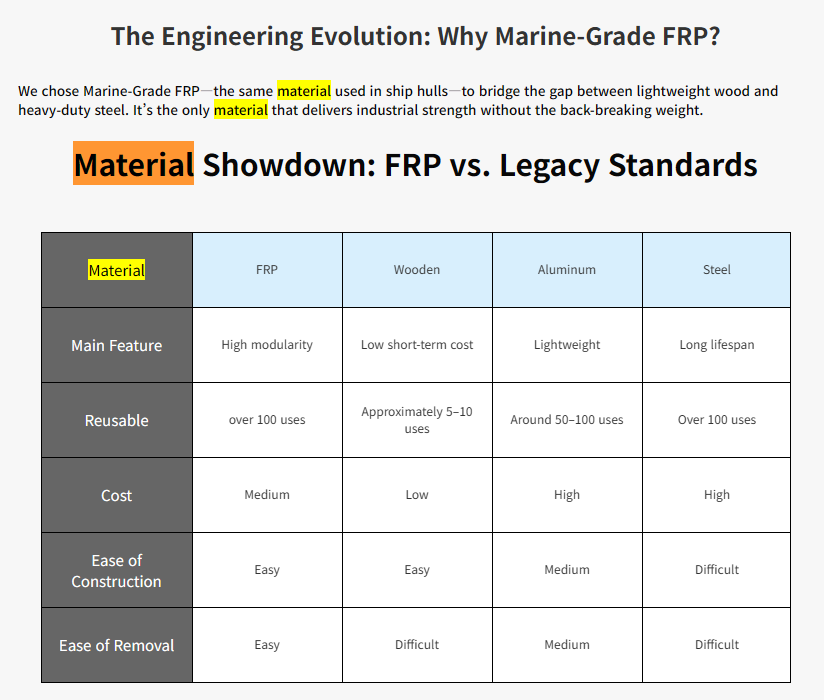
For formwork contractors and site supervisors, material selection should be judged by three jobsite factors: climate exposure, labor requirements, and expected reuse cycles. Moisture, heat, cold, lifting needs, crew size, and the number of pours all affect whether a formwork system protects margin or creates hidden cost.
This guide compares common concrete formwork materials, including timber, plywood, steel, aluminum, FRP, and plastic, to help contractors and site supervisors evaluate which option best fits their project needs.
Timber and plywood remain common choices for concrete formwork because they are affordable, easy to cut, and flexible on jobs that require custom shapes. For short-term projects, small pours, or irregular details, wood-based formwork can be a practical option when fast on-site adjustment matters more than long-term reuse.
The main limitation is lifecycle cost. Timber and plywood typically have fewer reuse cycles than engineered metal, FRP, or plastic systems, and performance can decline when panels absorb moisture, warp, swell, or lose surface quality. On repeat-use projects, replacement labor, material waste, hauling, and disposal can reduce the savings from the lower purchase price.
Timber and plywood are best suited for short-duration work, one-off shapes, and projects where customization is more important than high reuse.
Steel and aluminum formwork provide rigidity, repeatability, and a clean concrete finish, making them a strong fit for large infrastructure, high-rise construction, and standardized repeated pours.
The tradeoff is handling and jobsite control. Steel is heavy and often requires cranes, forklifts, or larger crews, while aluminum is lighter but still needs careful handling, storage, and protection across repeated use.
Moisture, coastal air, chloride exposure, and temperature swings can also affect performance. Steel may rust, and metal panels can transfer heat quickly in hot or cold weather, creating productivity and long-term cost concerns when equipment, storage, or weather exposure are constraints.
These systems work best when rigidity, finish quality, and high reuse potential outweigh the added demands of equipment, handling, and site management.
Advanced FRP and plastic formwork help reduce handling, replacement, and weather-related issues on the jobsite. Because the panels are lightweight, crews can carry and set them more easily, even when lifting equipment is limited.
Unlike wood, FRP and plastic do not absorb water, helping maintain form quality through repeated pours and wet conditions. Their higher upfront cost can be offset over time through longer reuse cycles, fewer replacements, and lower disposal needs.
Advanced FRP and plastic formwork are best suited for projects that need lightweight handling, weather resistance, high reuse potential, and better long-term cost control.
An ideal concrete formwork material is the one that fits the real conditions of the jobsite. A short custom project may benefit from timber or plywood, while large repeatable work may justify steel or aluminum. Projects with limited labor, tight handling conditions, or frequent reuse may benefit more from advanced FRP or plastic formwork.
Before choosing a system, compare more than the purchase price. Look at how many times the material can be reused, how much labor it requires, how it performs in wet or harsh weather, and how much replacement and disposal will cost over the full project.
Choosing the right formwork material helps contractors control labor, reduce waste, protect schedule, and improve long-term ROI.
Explore formwork manufacturers, each offering specialized solutions tailored to different on-site needs and construction challenges.

※We select companies that provide formwork suited to each type of building from those that have exhibited at World of Concrete in the past five years (2019-2024) as of June 21, 2024