
Formwork is essential in concrete construction, significantly improving the quality, durability, and efficiency of building projects. In this article, we’ll explore the different types of formwork, along with their key features and applications.
Formwork materials play a crucial role in determining the quality, cost-efficiency, and reusability of construction processes. Depending on the project requirements, different materials such as wood, plastic, and steel offer distinct advantages. Below, we explore the characteristics and use cases of each material type.
Wooden formwork is one of the oldest and most commonly used materials in concrete construction. Its primary advantages lie in its low initial cost and ease of customization. It is particularly suitable for small to medium-sized projects and complex shapes. However, due to its susceptibility to moisture and limited durability, wooden formwork is less ideal for large-scale or repetitive work. While not as reusable as steel or plastic, it remains popular for residential and low-rise structures where flexibility and affordability are key.
Plastic formwork is lightweight, reusable, and resistant to moisture, making it an excellent choice for projects in humid or wet environments. It is especially effective for repetitive tasks such as housing developments, where standardized shapes are required. Installation is straightforward, reducing labor costs, and its durability allows for multiple reuses without degradation. While the upfront cost is higher than wooden formwork, the long-term savings and performance benefits make it a cost-effective solution over time.
Steel formwork offers exceptional strength, durability, and reusability. It provides a high-quality finish to concrete surfaces and is ideal for large-scale or high-rise construction projects. Due to its rigidity and resistance to warping, steel formwork ensures dimensional accuracy and smooth finishes. While the initial investment is significant, its long service life and ability to withstand heavy use make it a preferred choice for commercial and industrial developments. It’s particularly effective in repetitive concrete works like tunnels, bridges, and tall structures.
Beyond the material, formwork can also be categorized based on its specific application in a construction project. Each type is designed to suit different structural elements, such as walls, columns, slabs, and vertical climbs. Choosing the right application-based formwork improves construction efficiency, safety, and overall structural integrity.

Wall formwork is used to create concrete walls, a crucial element in ensuring the structural stability of buildings. This system allows for the quick and precise construction of both horizontal and vertical structures. Wall formwork is also flexible enough to accommodate complex wall shapes, making it suitable for a wide range of construction projects.

Column formwork is specifically designed for forming concrete columns. It plays a vital role in enhancing the precision and efficiency of vertical construction. Easy to assemble and disassemble, column formwork helps reduce construction time and costs. It is particularly suited for high-rise buildings, bridges, and tunnels, where strength and durability are crucial to the structure's quality.

Slab formwork is used to create concrete slabs, playing a key role in the construction of horizontal structures. This formwork is easy to install and remove, significantly improving on-site efficiency. Slab formwork is well-suited for buildings with large flat surfaces, such as office buildings, commercial facilities, and residential constructions.
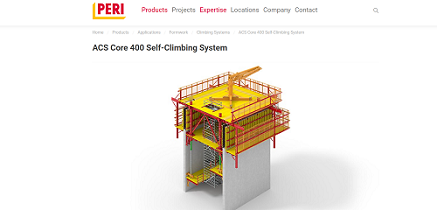
Climbing formwork is a system used in high-rise buildings and large infrastructure projects. As concrete is poured and solidifies, the formwork is progressively raised, enabling continuous construction. By eliminating the need for dismantling and reassembly, climbing formwork enhances construction speed and safety. This system is particularly effective for projects involving high-rise buildings, bridges, and dams.
Permanent formwork, also known as stay-in-place formwork, remains as part of the final structure and eliminates the need for removal after the concrete has set. Made from materials such as fiber-reinforced plastic, steel, or precast concrete, it not only supports the initial pour but also enhances the structural integrity and durability of the finished construction. This method is especially beneficial for foundations, retaining walls, and underground structures. It reduces labor costs and speeds up construction by combining forming and structural functions.
Here we have selected formwork manufacturers recommended for low-rise residential and commercial buildings, high-rise buildings and condominiums, as well as buildings with unique shapes.

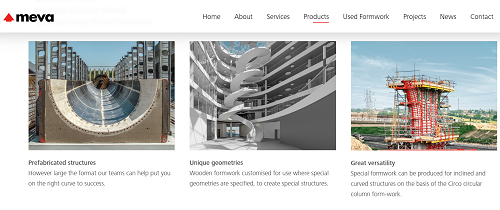
※※We select companies that provide formwork suited to each type of building from those that have exhibited at World of Concrete in the past five years (2019-2024) as of June 21, 2024